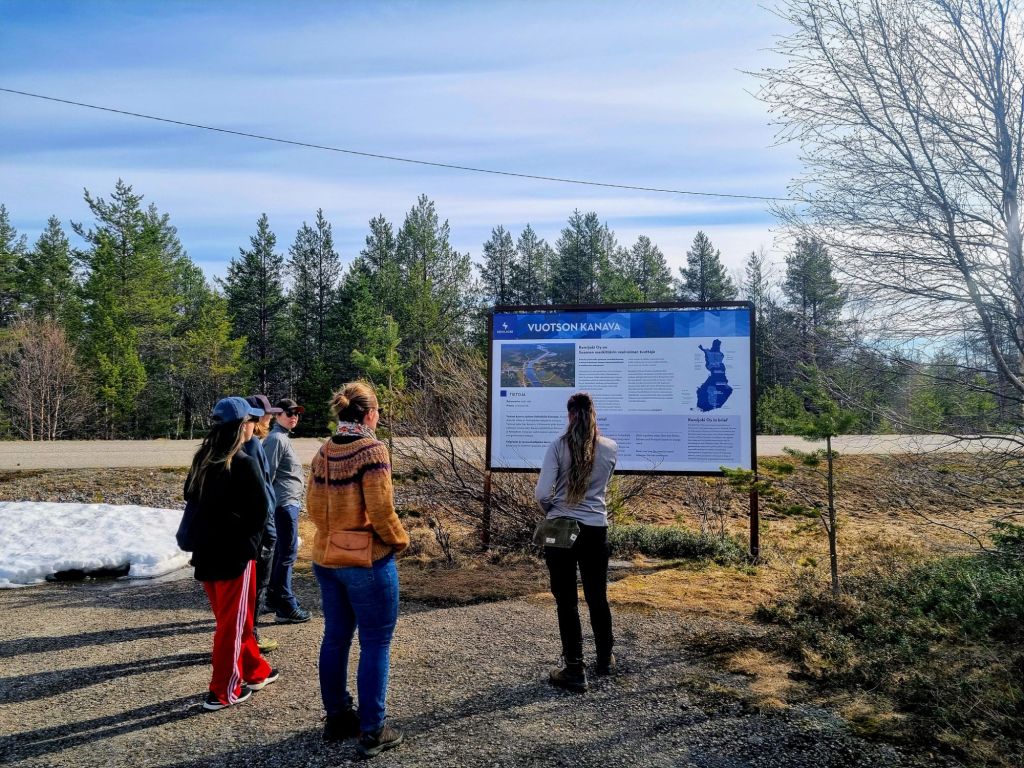
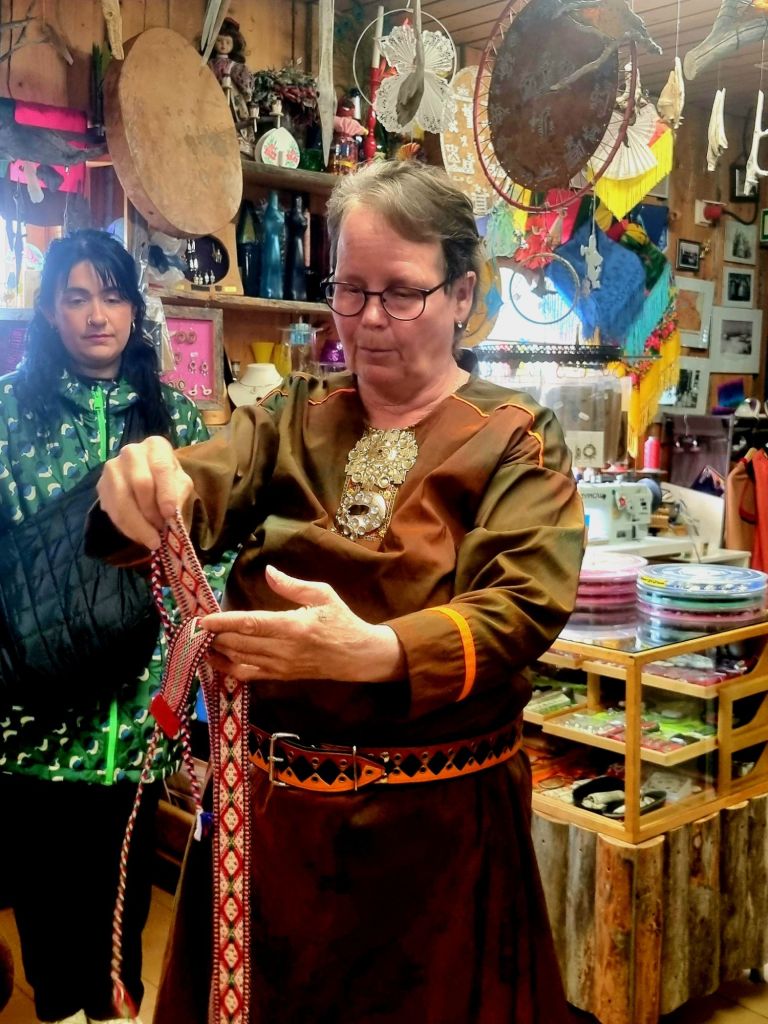
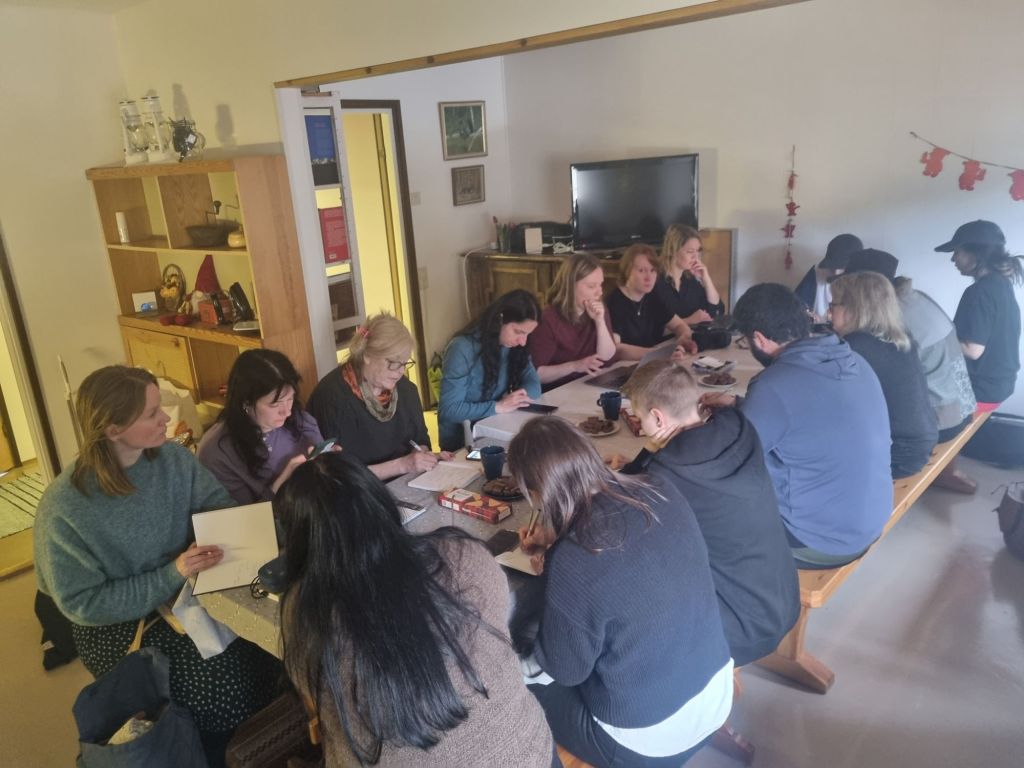
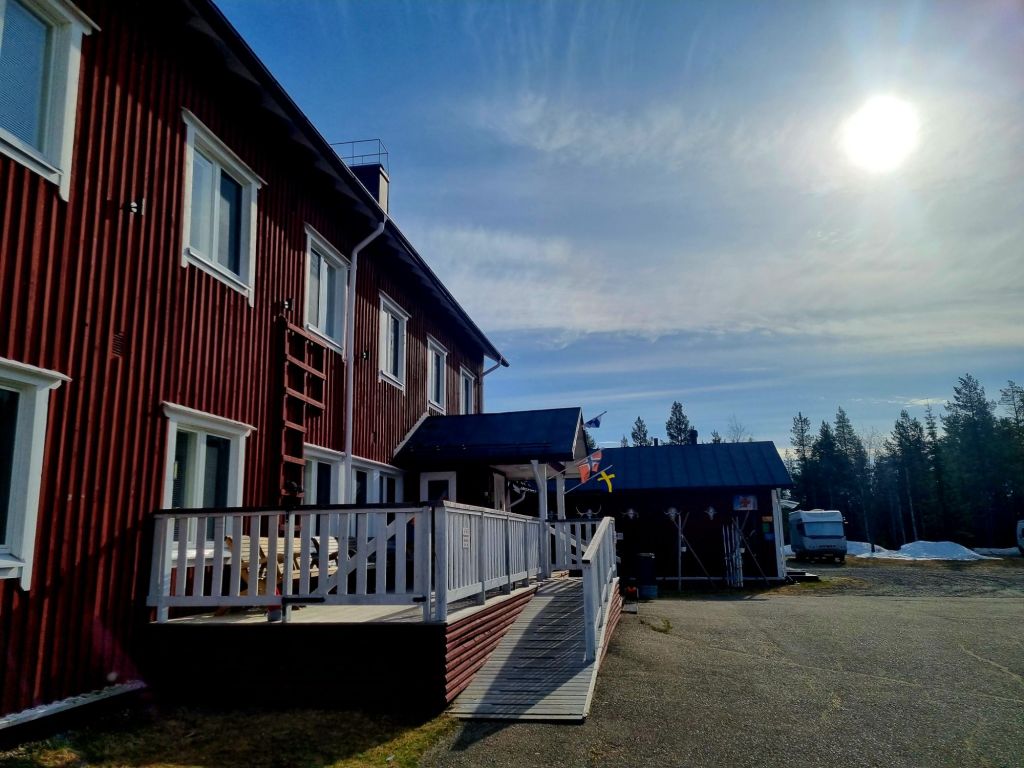
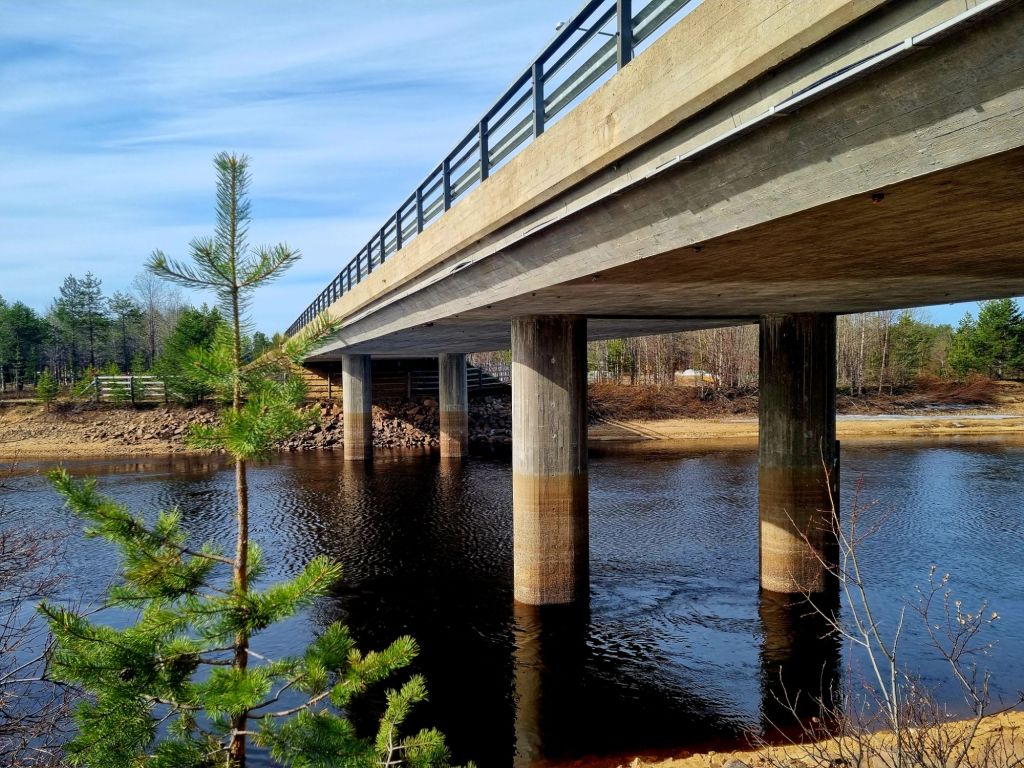
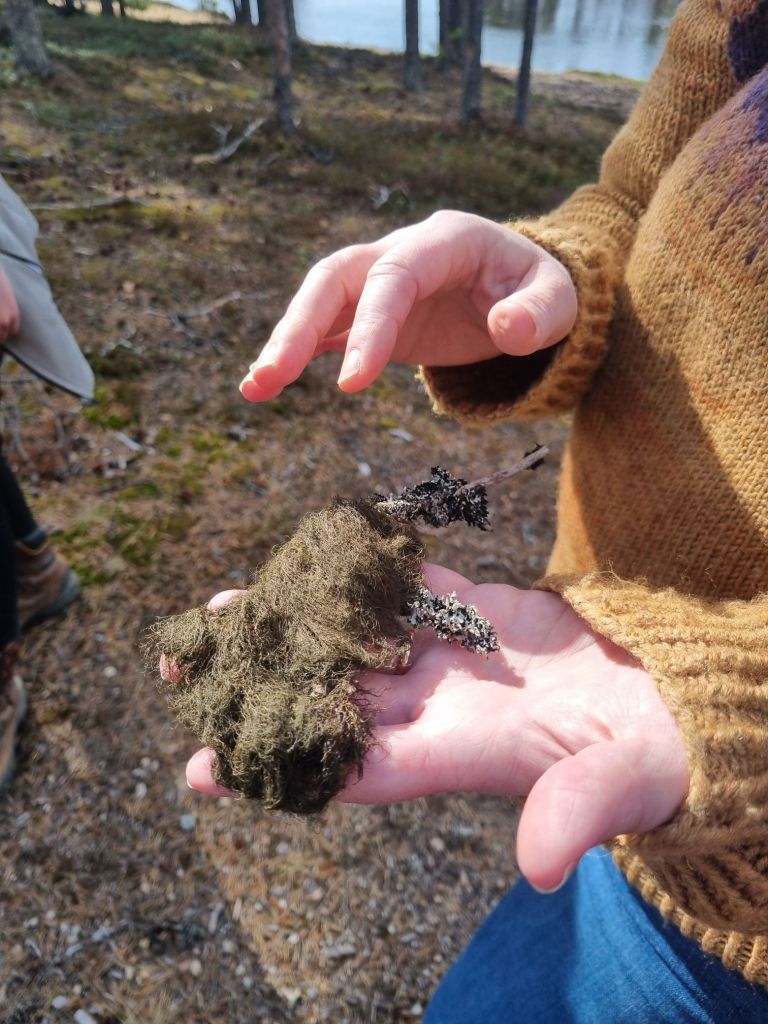
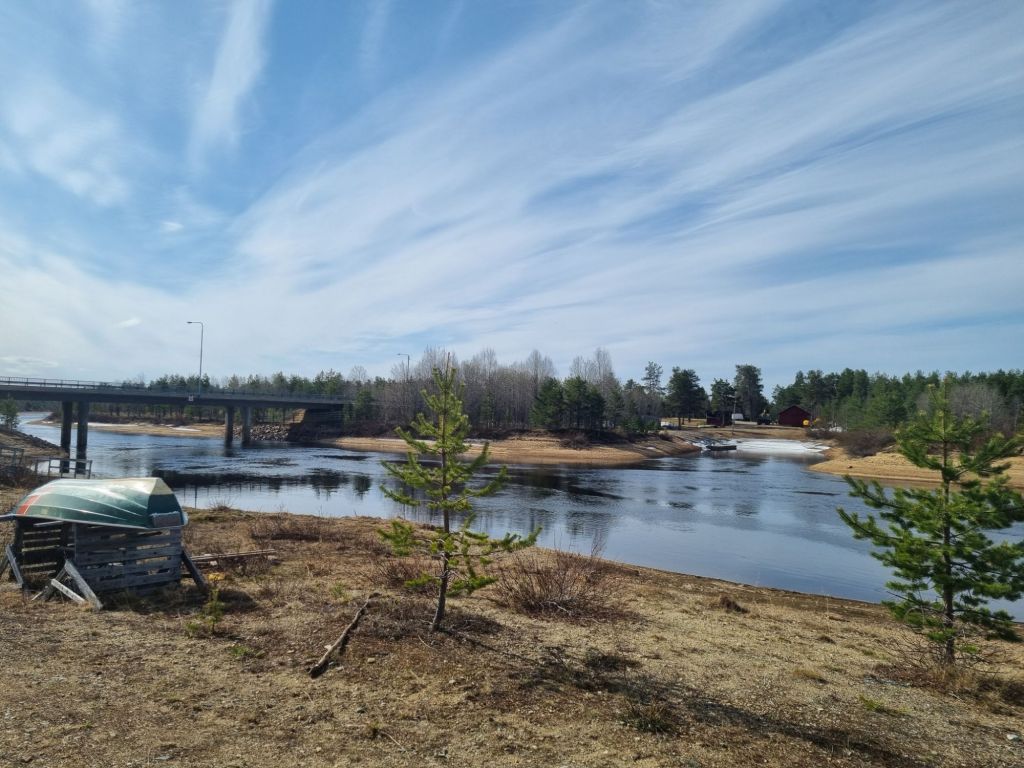
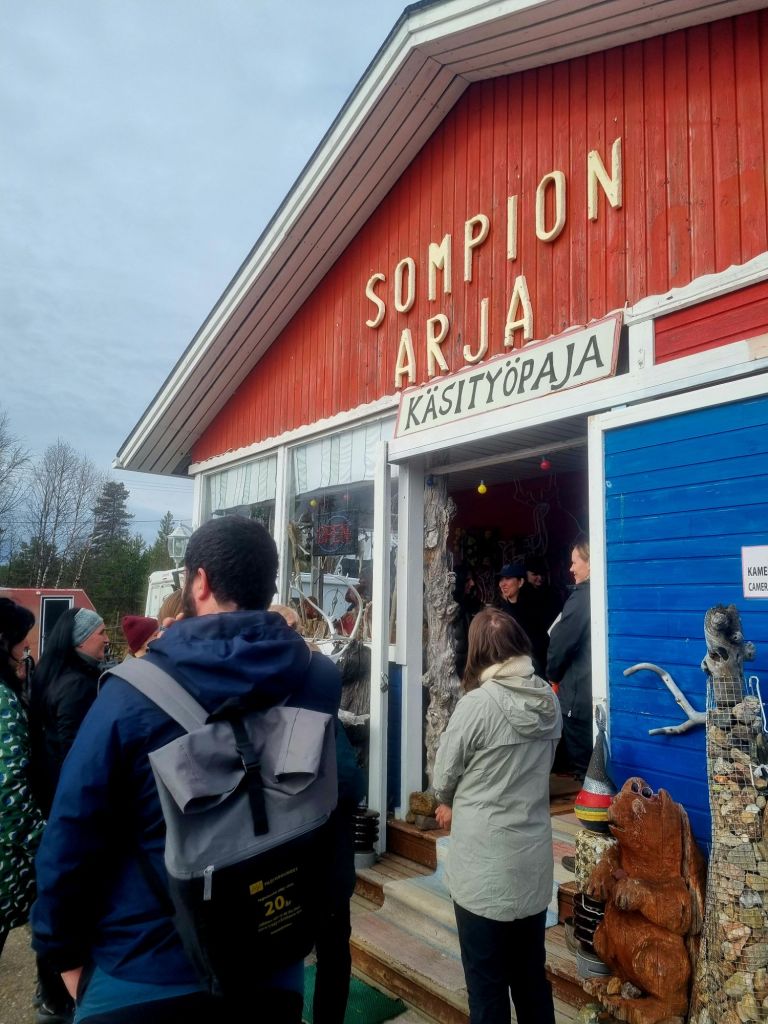
Living in the Landscape (LILA 2024) Methods Summer School at Vuotso, Lapland. Students from across the ASAD network worked on tasks in the landscape focusing on “green energy” across several sites including here at Vuotso, Lapland.
Vuotso Forest CC-BY EalaCreative
Working together for #UWS #EalaCreative Scotland in LILA 2024 Methods Summer School
Editors: Timo Jokela, Maria Huhmarniemi & Kathryn Burnett
Deadline for synopsis Monday 29th January 2024: for further information see here.
Relate North is an English language, peer-reviewed publication dedicated to exploring and sharing contemporary practices in arts-based research and art-based knowledge exchange in the fields of arts, design and visual culture education across the North and Arctic. The term ‘art’ should be interpreted broadly to include, for example, design, crafts, indigenous making, media and product or service design. Proposals for chapters are sought for this book, which will focus on the general theme of ‘New Genre Arctic Art Education beyond Borders’.
We are interested in submissions that investigate art and art education practices and discuss the potential of contemporary arts for the Arctic region. The socio- and ecocultural challenges facing the Arctic region call for innovative responses. The concept of new genre Arctic art refers to Indigenous and other artistic expressions, interventions, and new forms of crafts and cultural heritage that share interests in the Arctic’s material culture and handcraft skills. In addition, we seek present- and future-oriented chapters on, for example, art and art and culture education related to the new genre Arctic art. We especially welcome your visions and insights that challenge the notion of ‘borders’.
For further information on abstract/synopsis submission and requirements see here.
Tuonela – the realm of the dead – is the setting for the Kavela’s mythic hero Lemminkäinen‘s fate. Read more here about this famous Finnish tone poem by Sibelius The Swan of Tunela.
Tuonela. 1934 by Paul Landacre Born: Columbus, Ohio 1893 Died: Los Angeles, California 1963 wood engraving on paper sheet: 16 5/8 x 10 1/2 in. (42.2 x 26.8 cm) Smithsonian American Art Museum Museum Purchase 1982.95.1. “Tuonela” by americanartmuseum is licensed under CC BY-NC-ND 2.0.
You can read much more on this epic tale as the inspiration for Jean Sibelius, – Finland’s famous music composer – composition – the Lemminkäinen Suite – here.
The Kalevala – Finland’s national ‘story epic’ and work by artist Akseli Gallen-Kallela will be forever entwined.
You can read more about these links between ‘ancient stories’ and ‘modern times’ in an essay by Michael Hunt (2019), for the exhibition The Kalavala – In Other Words.
Elsewhere you can read more about “an alternative Kalavela” and research by Juha Pentikäinen, Professor of Modern Ethography at the University of Lapland. Juha Pentikäinen‘s research includes a focus on the deeper shamanic roots of the Kalavela’s folktales. See also here a discussion on the Kalavela’s philosophy, its story roots as ‘deep knowledge’ and links to folk healing.
“Tuonela is described as being at the northernmost part of the world but is sectioned apart from the world of the living by a great divide. In the divide flows the dark river of Tuonela. The river is wild, and the dead can be seen trying to swim across it. The dead must cross the river, either by a thread bridge, swimming, or taking a boat piloted by the daughter of Tuoni.[1] The river is guarded by a black swan that sings death spells.” Source https://en.wikipedia.org/wiki/Tuonela
The Finnish word for swan is joutsen. The word derives from jousi, the Finnish word for arrow.
Celtic Swans and Children of Lir in the Cairngorm National Park
Scottish and Irish mythology – a ‘Celtic mythology’ also features swans and here is a link to the famous Finnish story The Swan of Tuonela (and also a mention of the Irish story ‘The Children of Lir‘) as told by “The Irish in Finland”.
Finally, find a storytelling link here to the Scottish links to this folktale of the swan Children of Lir that includes a link to the history of Insh Church (the chapel of the swans) as told by Scottish musician Hamish Napier. The children turned to swans – as it is told here – flew between Ireland and Scotland for nine hundred years before eventually – on being turned back to their human form – they crumble to dust. Find some more information on Insh Church at the Am Baile Highland archive collections site. The church is near Loch Insh in Badenoch, located in the Cairngorm National Park in Scotland’s highlands. Nearby to the church is Insh Marshes a national nature reserve rich with ecology and wildlife as”one of the most important wetland areas in Europe”.
Image credit : Shetland Arts (CC-BY-ND-2.0) at Flickr Timo Jokela exhibition, Feb 2010 – schools workshop the gallery – Lunnasting II
“Today, the Arctic is developing into an important hub of the twenty-first century; industrially, socially and politically. We believe that the economic potential of the region should be harnessed in a way that brings prosperity and guarantees the livelihood and social-cultural progress of Arctic inhabitants and communities.”
At our EALA Project sharing site we aim to connect and create materials and resources for a focus on ‘north’ art and design for sustainability and connections between Scotland and the Arctic. What is North – as Jokela and Coutts (2018) have detailed below – can and does include regions that are experienced ‘as north’, as well as northern parts of countries. We are especially keen to direct interested readers and creative content makers to the UArctic ASAD thematic network resources available for research and learning. Editors of the Relate North series Timo Jokela and Glen Coutts talk below of the importance of testing and developing new art and design methodologies via the UArctic ASAD network, and other key art education connections including InSEA (see the recently published RelateNorth #9DOI: 10.24981/2022-RN#9).
“… we explore the notion of the North1 and the Arctic as a ‘laboratory’ of art and design education for sustainability. The chapter is organised in three sections, the first is a discussion of the idea of northern conditions as an environment for testing and developing new art and design methodologies. In particular, we are interested in how art might address the effects of rapid changes in the social, cultural and economic setting and post-colonial situation of the area.”
When we refer to the North we mean the northern part of the world on the northern hemisphere or northern parts of specifc countries, for example northern Canada, Scandinavian and Nordic countries and countries around the Circumpolar North and regions rather than simply the direction in which a compass normally points.
Image credit Shetland Arts (CC-BY-ND.2.0) at Flickr Timo Jokela @ Bonhoga Gallery, Weisdale Mill, Shetland. 13 Feb – 7 March 2010.
Sharing platforms such as Flickr creative commons offer digital facilities for individuals and organisations to upload and share their images and content for wider re-use based on various ‘Creative Commons’ licence conditions. Examples can include images taken of places, events -such as this image above by Shetland Arts – or artefacts and can include images shared by both professional and amateur photographers, as well as researchers, archivists, policy champions and many others in many roles. You can read more about Flickr here.
Arctic Nature in Lapland, Finland by Niara (CC-BY-2.0) at Flickr Utsjoki to Rovaniemi There are bogs, forests, lakes, rivers, rocks, fells, fields, water in Finnish Lapland. The photo was taken from the bus. Some of these photos are taken from the bus between Utsjoki and Rovaniemi.
Co-designing the EALA logo for EALA project by Bingrui Sui CC-BY-2.0 at Flickr
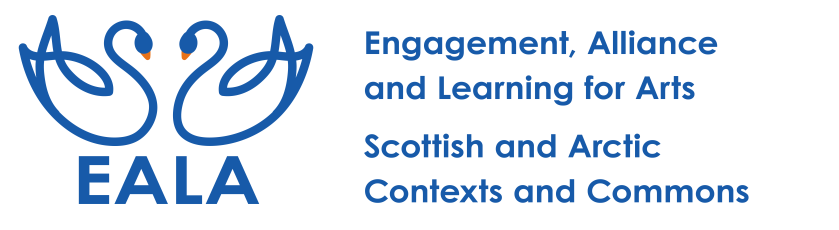
I was very happy when I knew that the shape of the EALA logo I was going to design was to be a swan. In the year or so that I have lived in Ayr, the wildlife I have seen often, and found most memorable, are the swans on the river. They are free to feed and play in the river in groups every day. In creating a graphic for the EALA project – with the name EALA the word for swan in Scottish Gaelic – I was inspired by the birds on the Ayr River, taking time to watch them and to sketch and model the creation of some ideas for an image. In terms of my developing of the initial design by EALA project lead for a swan shape logo, the first thing that came to my mind is the classic version of Swarovski swan logo image. In this logo, the swan wings are made of a bunch of dots, which makes the whole logo very elegant. But I wanted to design the image of the swan as a little more closer to life, and most especially I wanted to reflect the lively and flexible aspect of the swan’s movement. As for the final presentation form of this EALA logo, I choose to use strong lines for the outline. Because the simpler the shape, the easier it is for the viewer to remember. The lines created a sharp yet elegant feeling. In the design of the swan’s body shape, I gave the swan a rich and ‘full’ outline as observing the swans in the Ayr River impressed upon me this sense of fulllness, that they were ‘fat’. Fat is not a bad word, it reflects the swans’ freedom, unfettered, and that their living environment is good. The silhouette of the swan’s tail and wings is the highlight of the logo and the ‘punchline’ of the whole design. When I sourced various logo cases of swans online I found that most of the swan logos are dedicated to showing the posture of swans when they open their wings, depicting the wings of swans straight and high, just like the brilliance of a peacock. I found that swans spread their wings when bathing, fighting, and mating and I was drawn to this and learned much more about the nature of these birds. Working with the EALA lead (Kathryn A. Burnett) in Scotland we spoke about the design concept of our EALA logo and the idea of cultural links and partnership. The two swans being mirrored in the graphic logo represent Scotland and Finland respectively and how we are producing content about both Scotland and the Arctic under the commons of friendly cooperation. I chose the pose of a swan with its wings slightly spread. I like the upward tail of swans very much. The upward tail makes the overall flow shape of swans very smooth, and matches well with the long neck of swans, reflecting the graceful posture of swans. In terms of colour choice, I spoke to Kathryn and we explored both the colours of both Finland and Scotland’s flag. Both have a wonderful blue colour but in the end as I decided to use the blue from the Scottish flag as the outline colour of the swan as I personally now love the blue of the Scottish flag; it is very bright and vibrant. And for the swan’s beak I used orange to style the beak but it also works quite well to distinguish it from the blue, and the swan graphic looks more vivid, and with a more distinctive look.
River Ayr UWS campus landscape By EALA Project CC-BY-2.0 at FlickrBy Bingrui Su, MA Creative Media Practice, University of the West of Scotland
Welcome to the EALA project ‘blog post’ page. Some of our explorations and OER resources based around our EALA project learning are shared here with links to available materials and downloads. This is a learning space for the EALA team and so we may look to revise, amand and improved our materials and OER elements – learning as we go – so you may see some things (posts, images and other materials) change over time!
Why EALA ? – Our EALA project has taken its title – and its logo – from the swan. The swan represents Finland’s national bird and our University of Lapland partner as well as the symbolic connection the swan holds in many cultures of ‘the North’ as symbolic of mythical creatures, transformation, and other worlds, not least here in Scotland. In the Gaelic language of Scotland the word for swan is eala. As part of the original idea for the project we wished to select an image that represented ideas of partnership, connection, mobility and the migration of knowledge and understanding. We also wanted to celebrate the ecocultures of place while we explored our Arctic and near Arctic contexts. The UWS (University of the West of Scotland) Ayr Campus is located on the River Ayr and we see swans regularly in the rivers, coasts and lochs nearby. One of the EALA participants is international student Bingrui Sui studying MA Creative Media Practice at UWS who worked to develop our original first draft design to the final EALA logo you can see above. You can read about Bingrui’s reflection on the creation of this resource here.
This EALA learning exchange project (2022-2023) explored Scotland’s links to the Arctic through an OER focus for learning and creativity exchange. OER – open education resource – is a process and ambition to create, curate and circulate materials and artifacts such as images, texts and documents for wider access and sharing. EALA as a title also offers us a simple summary of the project’s frame of reference: Engagement, Alliance and Learning for Arts. Please click on the menu for more information and we look forward to sharing our artefacts and reflections with you.



 EalaCreative