EALA Sharing

“Northern Conditions” – Arctic Sustainable Arts and Design -ASAD

Timo Jokela exhibition, Feb 2010 - schools workshop the gallery - Lunnasting II
Image credit : Shetland Arts (CC-BY-ND-2.0) at Flickr
Timo Jokela exhibition, Feb 2010 – schools workshop the gallery – Lunnasting II

“Today, the Arctic is developing into an important hub of the twenty-first century; industrially, socially and politically. We believe that the economic potential of the region should be harnessed in a way that brings prosperity and guarantees the livelihood and social-cultural progress of Arctic inhabitants and communities.”

Jokela and Coutts (2018:99)

At our EALA Project sharing site we aim to connect and create materials and resources for a focus on ‘north’ art and design for sustainability and connections between Scotland and the Arctic. What is North – as Jokela and Coutts (2018) have detailed below – can and does include regions that are experienced ‘as north’, as well as northern parts of countries. We are especially keen to direct interested readers and creative content makers to the UArctic ASAD thematic network resources available for research and learning. Editors of the Relate North series Timo Jokela and Glen Coutts talk below of the importance of testing and developing new art and design methodologies via the UArctic ASAD network, and other key art education connections including InSEA (see the recently published RelateNorth #9 DOI: 10.24981/2022-RN#9).

“… we explore the notion of the North1 and the Arctic as a ‘laboratory’ of art and design education for sustainability. The chapter is organised in three sections, the first is a discussion of the idea of northern conditions as an environment for testing and developing new art and design methodologies. In particular, we are interested in how art might address the effects of rapid changes in the social, cultural and economic setting and post-colonial situation of the area.”

Jokela and Coutts (2018:99)

Source and Recommended reading : Timo Jokela and Glen Coutts (2018) The North and the Arctic: A Laboratory of Art and Design Education for Sustainability, (pp. 99-117) in Relate North. University of Lapland Press.

When we refer to the North we mean the northern part of the world on the northern hemisphere or northern parts of specifc countries, for example northern Canada, Scandinavian and Nordic countries and countries around the Circumpolar North and regions rather than simply the direction in which a compass normally points.

Timo Jokela @ Bonhoga
Image credit Shetland Arts (CC-BY-ND.2.0) at Flickr
Timo Jokela @ Bonhoga Gallery, Weisdale Mill, Shetland. 13 Feb – 7 March 2010.

Sharing platforms such as Flickr creative commons offer digital facilities for individuals and organisations to upload and share their images and content for wider re-use based on various ‘Creative Commons’ licence conditions. Examples can include images taken of places, events -such as this image above by Shetland Arts – or artefacts and can include images shared by both professional and amateur photographers, as well as researchers, archivists, policy champions and many others in many roles. You can read more about Flickr here.

Arctic Nature in Lapland, Finland
Arctic Nature in Lapland, Finland by Niara (CC-BY-2.0) at Flickr Utsjoki to Rovaniemi
There are bogs, forests, lakes, rivers, rocks, fells, fields, water in Finnish Lapland.
The photo was taken from the bus. Some of these photos are taken from the bus between Utsjoki and Rovaniemi.

Connections over place : Cairngorm

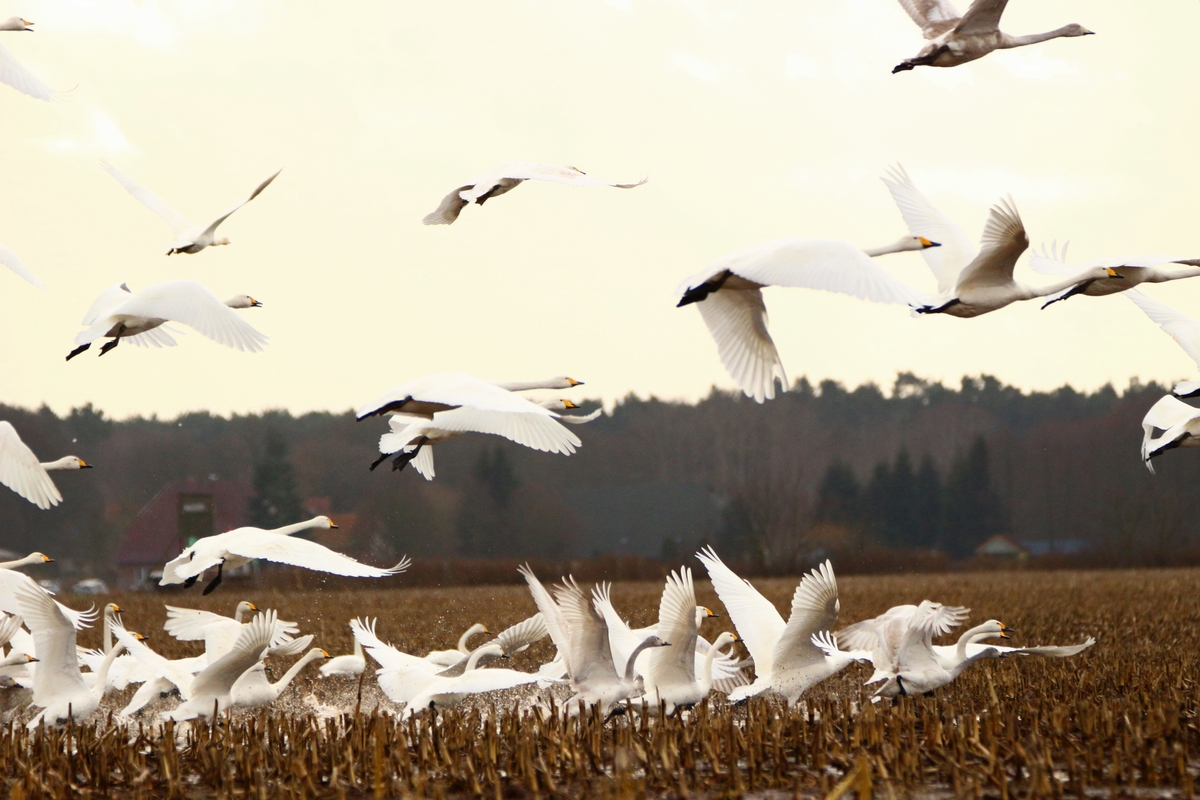
Swans Flying Over Loch Insh
Swans Flying Over Loch Insh by charlieishere@btinternet.com is licensed under CC BY 2.0 at Flickr

The image above of swans flying over Loch Insh is by the photographer Charlie Marshall. The EalaCreative team selected this striking image as representative not just of the swans who migrate to and from Scotland and circumpolar regions but also in this case, as the photograph is from Loch Insh, to connect here to a particularly special place and landscape – the Cairngorm mountain region in north-east Scotland. This mountainous area, with forests including large tracts of Scotland’s ancient Caledonian woodland, and freshwater lochs of snowmelt, is notable as being an area of mountain plateau of alpine and tundra like climate and ecology, a unique landscape in the whole of the British Isles.

“The Cairngorms provide a unique alpine semi-tundra moorland habitat, home to many rare plants, birds and animals. Speciality bird species on the plateaux include breeding ptarmigandotterelsnow buntinggolden eaglering ouzel and red grouse,[6] with snowy owltwitepurple sandpiper and Lapland bunting seen on occasion.[40] Mammal species include red deer and mountain hare,[6] as well as the only herd of reindeer in the British Isles. They now roam the high Cairngorms, after being reintroduced in 1952 by a Swedish herdsman. The herd is now stable at around 150 individuals, some born in Scotland and some introduced from Sweden; since the individuals depend on humans for food and come from domesticated stock, they are not considered wild.[7]

https://en.wikipedia.org/wiki/Cairngorms

The Cairngorm area is named after one of its main mountain peaks Cairn Gorm and the wider area most espcially in leisure and tourism terms is more often referred to as ‘The Cairgorms’. The region is now a designated national park (Scotland’s second) and is a Site of Special Scientific Interest (SSSI). More information on this can be found here NatureScot and a detailed summary of this Cairgorms SSSI can be downloaded from the NatureScot site, including the vegetation of alpine moss-heath, sedge and rush vegetation ‘communities’:

“The Cairngorms has the largest tracts in Britain of a range of alpine moss-heath and associated sedge and rush communities developed on base-poor granites and schists and the full range of these communities. The community characterised by three-leaved rush is
particularly well developed, with the full range of subtypes varying from those where woolly fringe-moss Racomitrium lanuginosum is co-dominant to open tussocky, lichen-rich areas.
Extensive areas of the plateau are dominated by stiff sedge Carex bigellowii and woolly hairmoss, particularly on the western spurs and ridges.”

Source: NatureScot, CAIRNGORMS SITE OF SPECIAL SCIENTIFIC INTEREST Highland, Moray, Aberdeenshire

Thorny topics? A best guide for attributions of materials for OER.

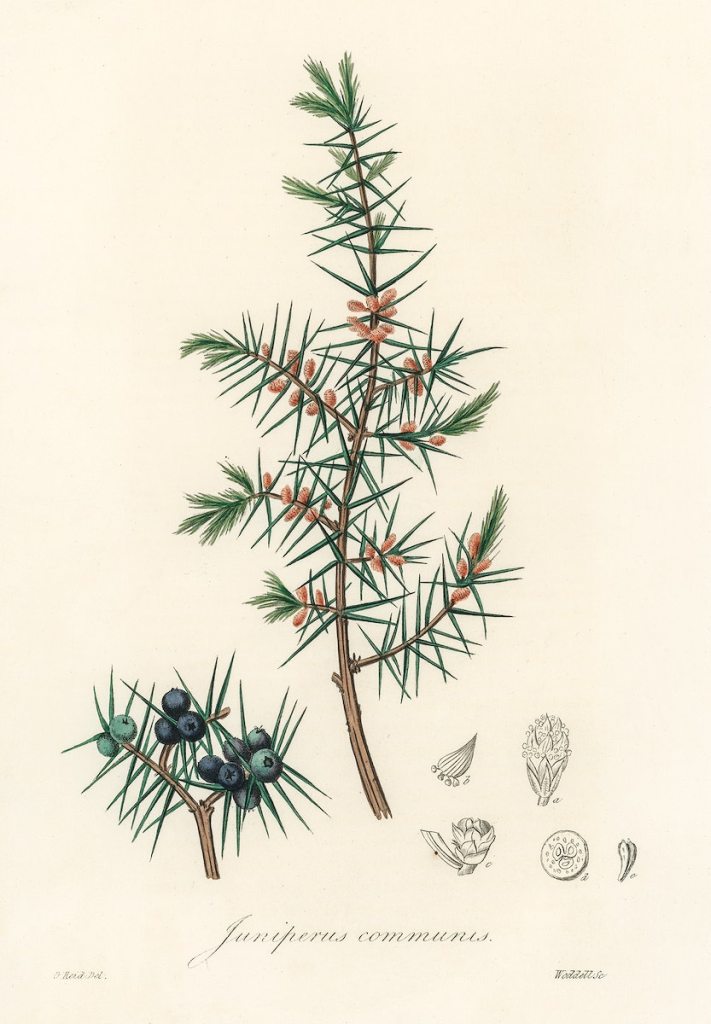
Common juniper (Juniperus communis) illustration from Medical Botany (1836) by John Stephenson and James Morss Churchill.” is marked with CC0 1.0 at Open Verse

At EALA we have been learning more and more about how to attribute materials and resources of others and our own. This can be a bit of a thorny process (!) and we soometimes get it wrong but we are working hard to revise and correct it. As we have progressed through our EALA project we have explored the learning, sharing and creating landscape of OER. We have learned together directly from key experts working in the field of learning technology and open education resources both in Scotland and the Arctic and circumpolar region.

We have also made good use of the great online materials and guides such as the Creative Commmons ‘best practice’ guide for attribution : https://wiki.creativecommons.org/wiki/best_practices_for_attribution. And we are especially keen to direct interested readers and creative content makers to the UArctic ASAD thematic network resources available for research and learning.

Respectful and Responsible Research -Foraging for Wild Plants

Photo by eberhard grossgasteiger on Pexels.com

For more information on responsible and respectful wild plant and botanical foraging see here a downloadable guide to this practice by Roddy Maclean that includes both Scots and Gaelic language botanical references at Nature Scot

“Among the birds”

n106_w1150
Nest of a Whooper Swan (Cygnus cygnus) (image “n106_w1150“) by BioDivLibrary 
is licensed under Public Domain Mark 1.0 at Flickr.

EALA has taken the swan as its motif. The EALA participants explored a number of resources related to swans, and other birds in both Scotland and the Arctic using online resources and digital repositories of images. This image of a nest of a Whooper Swan is from a collection of images held by the Biodiversity Hertiage Library from the book by R.H. Porter (1904) Three summers among the birds of Russian Lapland, London. Source: biodiversitylibrary.org/page/40161711

Biodiversity of the Arctic is a key safeguarding focus for the Arctic Council. You can read a full account of this here at the Arctic Council’s safeguarding the Arctic biodiversity pages.

“Ever since its establishment, environmental protection has been at the core of the work of the Arctic Council. In the Council’s founding document, the Ottawa Declaration, the eight Arctic States affirmed their commitment to protect the Arctic environment and healthy ecosystems, to maintain Arctic biodiversity, to conserve and enable sustainable use of natural resources. It does so through defined actions based on scientific recommendations.”

Quote Extract available from: https://arctic-council.org/explore/topics/biodiversity/

Group of flying whooper swans. Free public domain CC.0. 1.0 at Open Verse

NatureScot operates to manages Scotland’s biodiversity. In December 2020 the Scottish Government published the Scottish Biodiversity Strategy Post-2020: A Statement of Intent. This paved the way for the Scotland’s new, ambitious 25-year strategy drafted and review, to be published in Spring 2023.

“Our work contributes to the Scottish Government’s purpose of “creating a more successful country, with opportunities for all of Scotland to flourish, through increasing sustainable economic growth.” NatureScot

Scotland’s natural capital plays an important role in:

supporting economic growth

improving health and well-being

reducing greenhouse gas emissions and helping us to adapt to climate change

strengthening communities

Wildlife and biodiversity
Photo: Wildlife and biodiversity by Scottish Rural Network (CC-BY-SA-2.0) at Flickr
Image detail: The image relates to Wildlife and biodiversity Discussion theme at the Scottish National Rural Network regional event in Orkney. The event took place on 28th May 2010 at the St Magnus Centre in Kirkwall. You can find out more about the Rural Network at www.ruralgateway.org.uk.

EALA BLOG : Hello : Hei

Welcome to the EALA project ‘blog post’ page. Some of our explorations and OER resources based around our EALA project learning are shared here with links to available materials and downloads. This is a learning space for the EALA team and so we may look to revise, amand and improved our materials and OER elements – learning as we go – so you may see some things (posts, images and other materials) change over time!

EALA LOGO by Bingrui Sui CC-BY-2.0 at Flickr

Why EALA ? – Our EALA project has taken its title – and its logo – from the swan. The swan represents Finland’s national bird and our University of Lapland partner as well as the symbolic connection the swan holds in many cultures of ‘the North’ as symbolic of mythical creatures, transformation, and other worlds, not least here in Scotland. In the Gaelic language of Scotland the word for swan is eala. As part of the original idea for the project we wished to select an image that represented ideas of partnership, connection, mobility and the migration of knowledge and understanding. We also wanted to celebrate the ecocultures of place while we explored our Arctic and near Arctic contexts. The UWS (University of the West of Scotland) Ayr Campus is located on the River Ayr and we see swans regularly in the rivers, coasts and lochs nearby. One of the EALA participants is international student Bingrui Sui studying MA Creative Media Practice at UWS who worked to develop our original first draft design to the final EALA logo you can see above. You can read about Bingrui’s reflection on the creation of this resource here.

This EALA learning exchange project (2022-2023) explored Scotland’s links to the Arctic through an OER focus for learning and creativity exchange.  OER – open education resource – is a process and ambition to create, curate and circulate materials and artifacts such as images, texts and documents for wider access and sharing. EALA as a title also offers us a simple summary of the project’s frame of reference: Engagement, Alliance and Learning for Arts. Please click on the menu for more information and we look forward to sharing our artefacts and reflections with you.