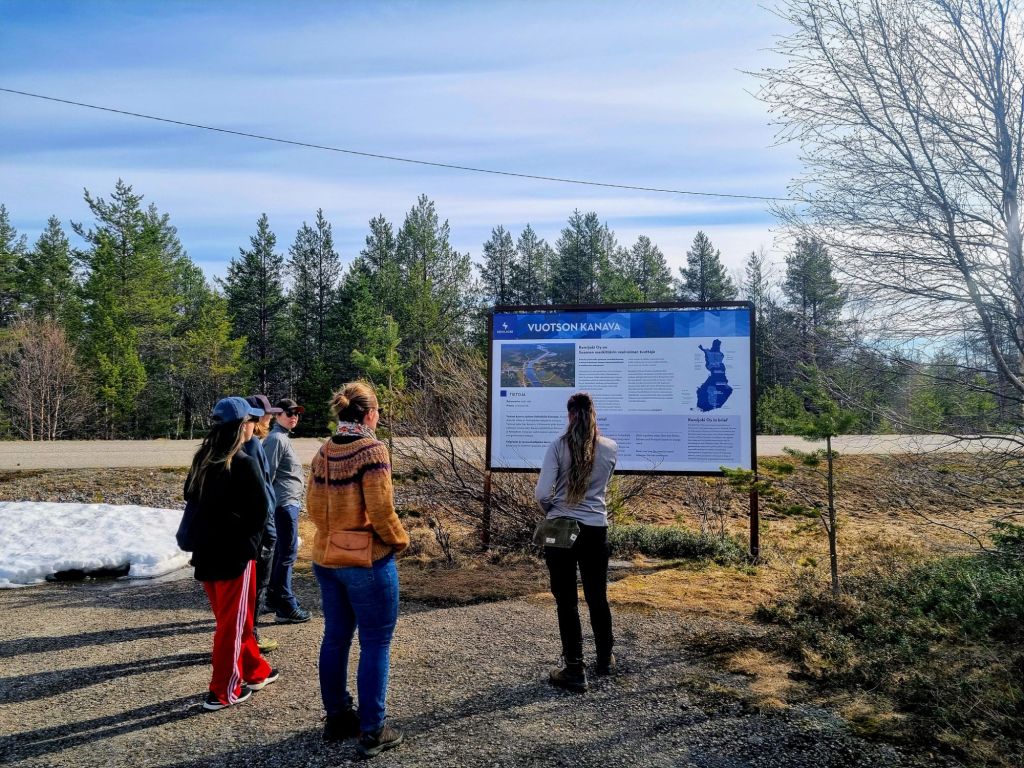
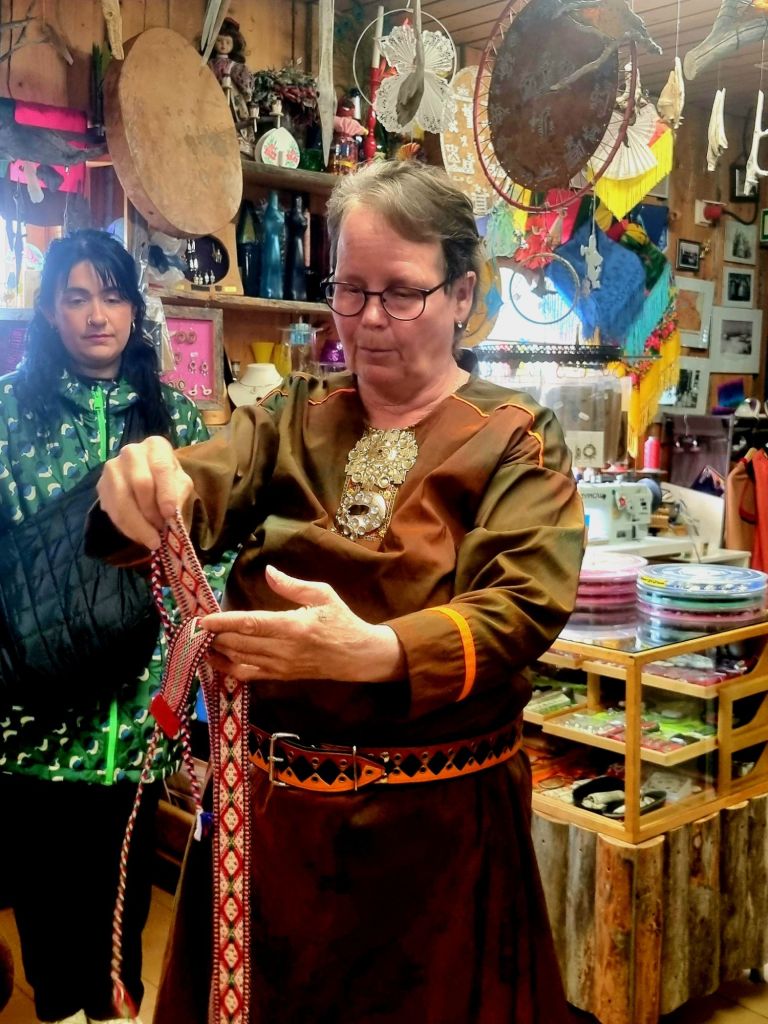
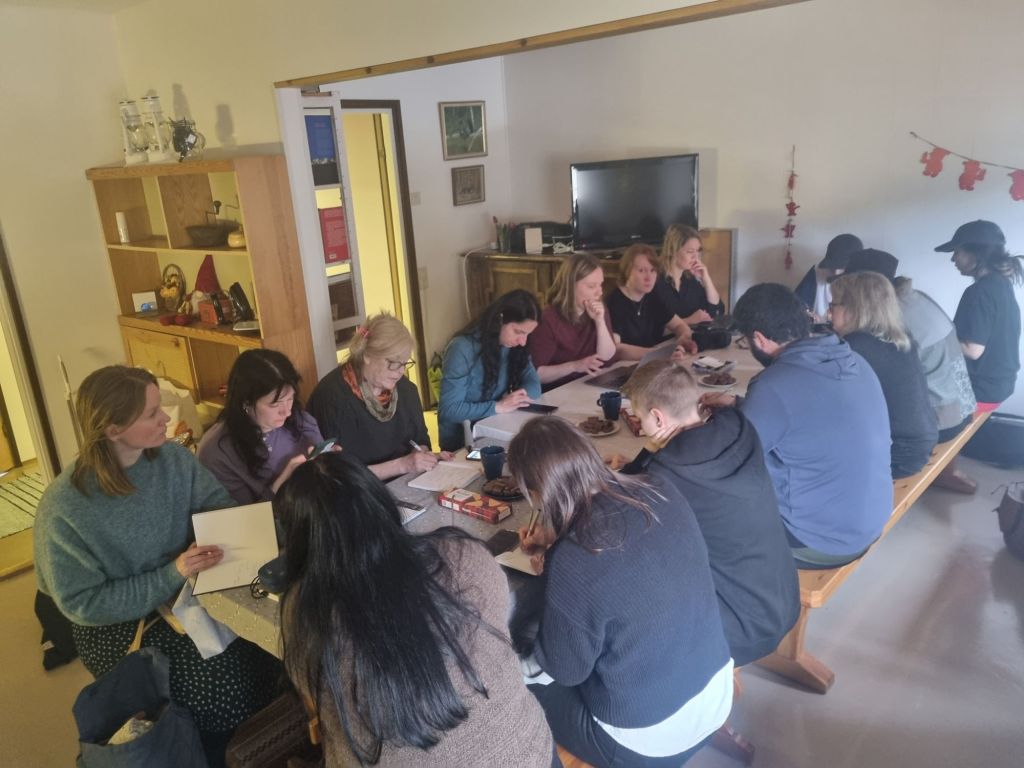
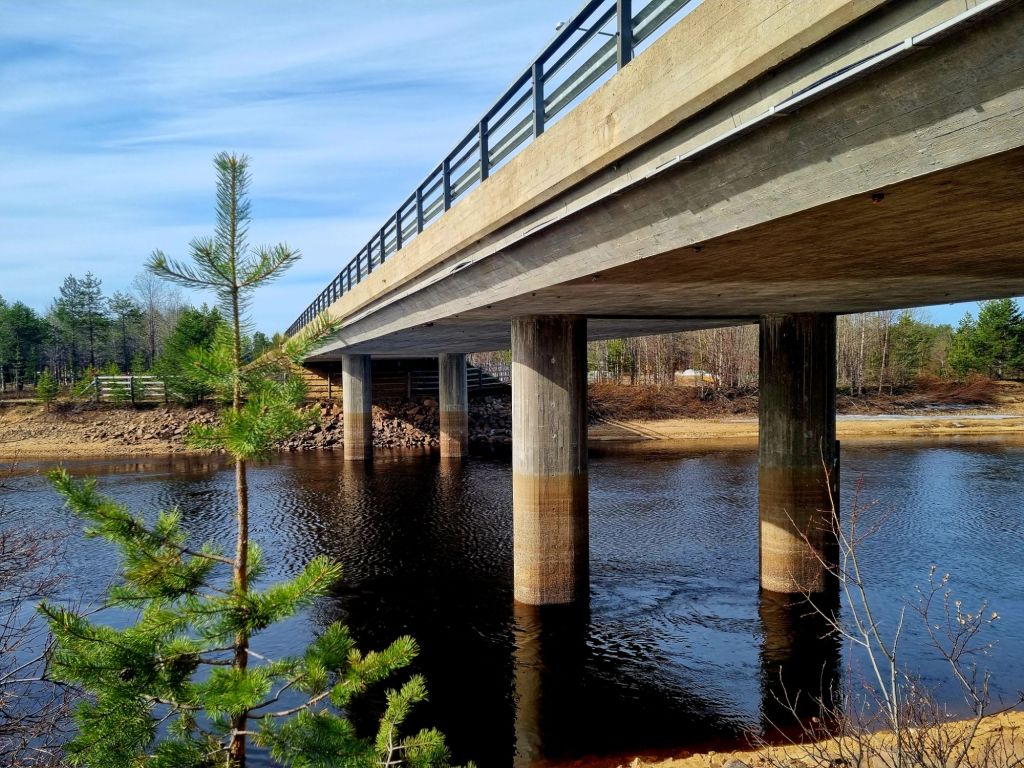
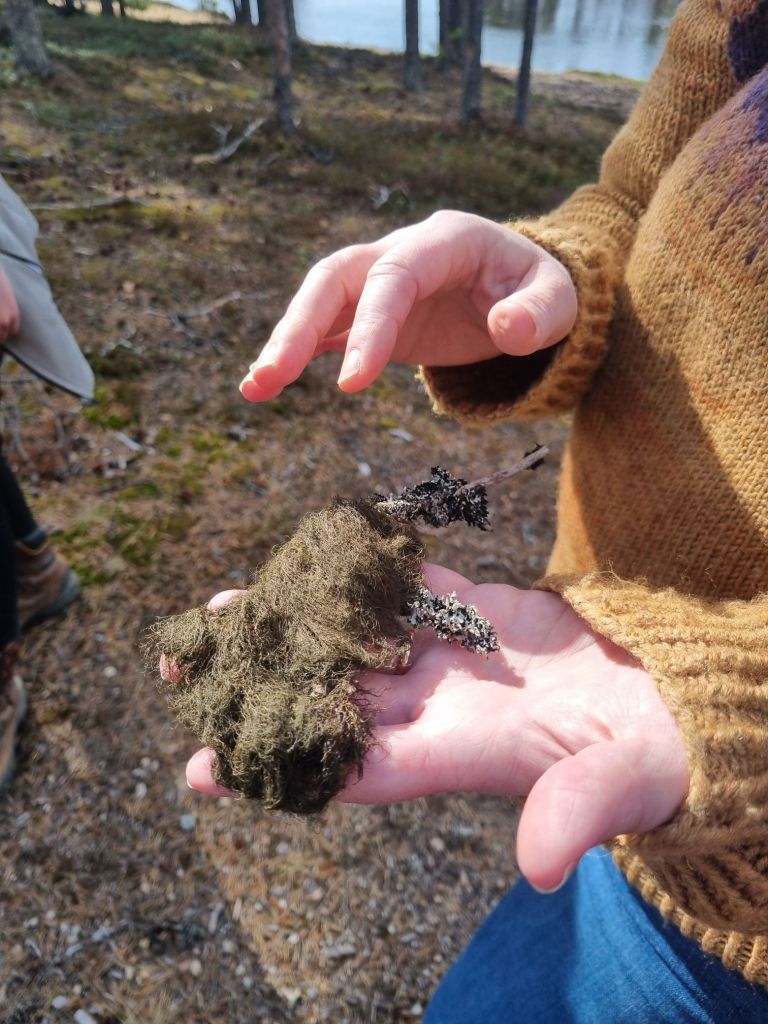
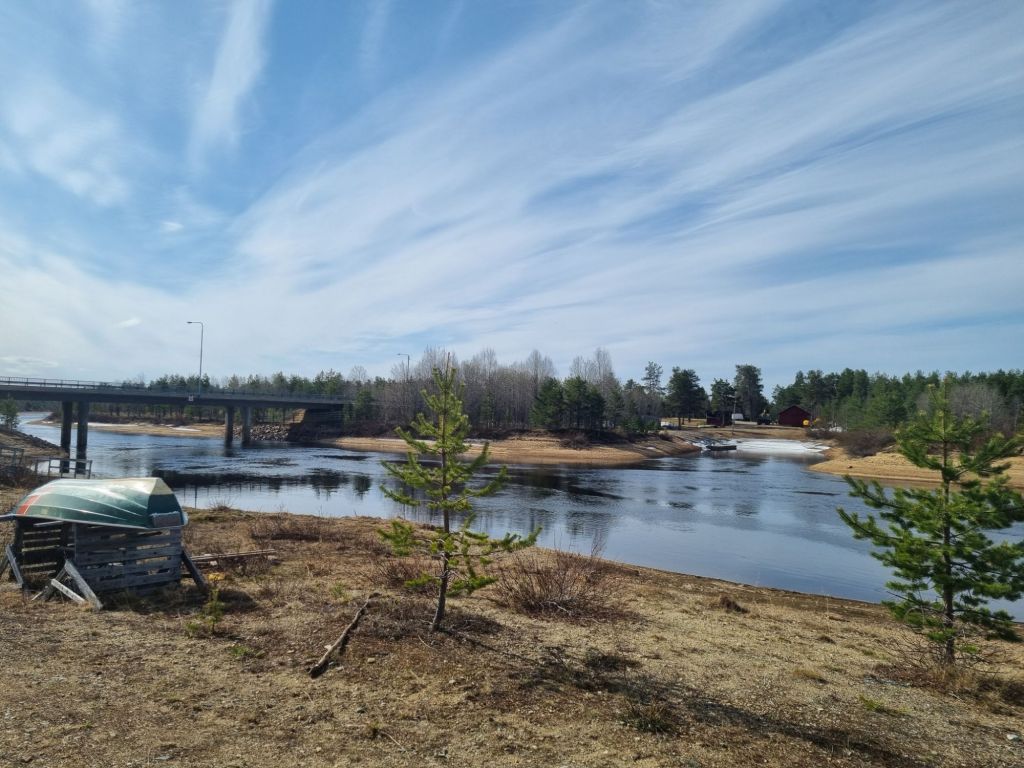
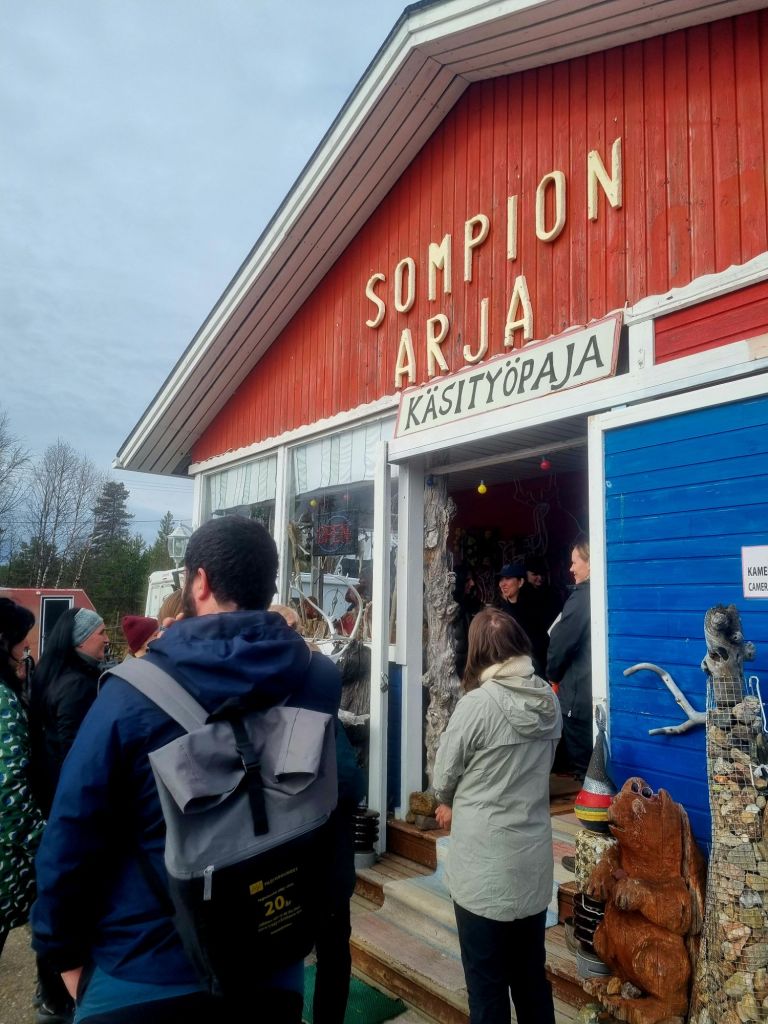
Living in the Landscape (LILA 2024) Methods Summer School at Vuotso, Lapland. Students from across the ASAD network worked on tasks in the landscape focusing on “green energy” across several sites including here at Vuotso, Lapland.
Vuotso Forest CC-BY EalaCreative
Working together for #UWS #EalaCreative Scotland in LILA 2024 Methods Summer School
Image credit : Shetland Arts (CC-BY-ND-2.0) at Flickr Timo Jokela exhibition, Feb 2010 – schools workshop the gallery – Lunnasting II
“Today, the Arctic is developing into an important hub of the twenty-first century; industrially, socially and politically. We believe that the economic potential of the region should be harnessed in a way that brings prosperity and guarantees the livelihood and social-cultural progress of Arctic inhabitants and communities.”
At our EALA Project sharing site we aim to connect and create materials and resources for a focus on ‘north’ art and design for sustainability and connections between Scotland and the Arctic. What is North – as Jokela and Coutts (2018) have detailed below – can and does include regions that are experienced ‘as north’, as well as northern parts of countries. We are especially keen to direct interested readers and creative content makers to the UArctic ASAD thematic network resources available for research and learning. Editors of the Relate North series Timo Jokela and Glen Coutts talk below of the importance of testing and developing new art and design methodologies via the UArctic ASAD network, and other key art education connections including InSEA (see the recently published RelateNorth #9DOI: 10.24981/2022-RN#9).
“… we explore the notion of the North1 and the Arctic as a ‘laboratory’ of art and design education for sustainability. The chapter is organised in three sections, the first is a discussion of the idea of northern conditions as an environment for testing and developing new art and design methodologies. In particular, we are interested in how art might address the effects of rapid changes in the social, cultural and economic setting and post-colonial situation of the area.”
When we refer to the North we mean the northern part of the world on the northern hemisphere or northern parts of specifc countries, for example northern Canada, Scandinavian and Nordic countries and countries around the Circumpolar North and regions rather than simply the direction in which a compass normally points.
Image credit Shetland Arts (CC-BY-ND.2.0) at Flickr Timo Jokela @ Bonhoga Gallery, Weisdale Mill, Shetland. 13 Feb – 7 March 2010.
Sharing platforms such as Flickr creative commons offer digital facilities for individuals and organisations to upload and share their images and content for wider re-use based on various ‘Creative Commons’ licence conditions. Examples can include images taken of places, events -such as this image above by Shetland Arts – or artefacts and can include images shared by both professional and amateur photographers, as well as researchers, archivists, policy champions and many others in many roles. You can read more about Flickr here.
Arctic Nature in Lapland, Finland by Niara (CC-BY-2.0) at Flickr Utsjoki to Rovaniemi There are bogs, forests, lakes, rivers, rocks, fells, fields, water in Finnish Lapland. The photo was taken from the bus. Some of these photos are taken from the bus between Utsjoki and Rovaniemi.
Welcome to the EALA project ‘blog post’ page. Some of our explorations and OER resources based around our EALA project learning are shared here with links to available materials and downloads. This is a learning space for the EALA team and so we may look to revise, amand and improved our materials and OER elements – learning as we go – so you may see some things (posts, images and other materials) change over time!
Why EALA ? – Our EALA project has taken its title – and its logo – from the swan. The swan represents Finland’s national bird and our University of Lapland partner as well as the symbolic connection the swan holds in many cultures of ‘the North’ as symbolic of mythical creatures, transformation, and other worlds, not least here in Scotland. In the Gaelic language of Scotland the word for swan is eala. As part of the original idea for the project we wished to select an image that represented ideas of partnership, connection, mobility and the migration of knowledge and understanding. We also wanted to celebrate the ecocultures of place while we explored our Arctic and near Arctic contexts. The UWS (University of the West of Scotland) Ayr Campus is located on the River Ayr and we see swans regularly in the rivers, coasts and lochs nearby. One of the EALA participants is international student Bingrui Sui studying MA Creative Media Practice at UWS who worked to develop our original first draft design to the final EALA logo you can see above. You can read about Bingrui’s reflection on the creation of this resource here.
This EALA learning exchange project (2022-2023) explored Scotland’s links to the Arctic through an OER focus for learning and creativity exchange. OER – open education resource – is a process and ambition to create, curate and circulate materials and artifacts such as images, texts and documents for wider access and sharing. EALA as a title also offers us a simple summary of the project’s frame of reference: Engagement, Alliance and Learning for Arts. Please click on the menu for more information and we look forward to sharing our artefacts and reflections with you.



 EalaCreative